College Park, Maryland
College Park Appliance Repair Co is the College Park crew for double oven repair: testing comes before pricing, the figure is put in writing, and the repair follows only after you approve it.
College Park Appliance Repair Co is the crew College Park calls for double oven repair: a diagnosis built on readings, one written figure, and work that does not begin until you have seen both.
Double ovens concentrate holiday cooking into one appliance, and they fail in one cavity first. We repair double wall ovens and double oven ranges, and because the cavities share controls and power, diagnosis has to separate what is shared from what is not. There is a pattern to double oven failures in College Park: they are noticed on weekends, before guests, and ahead of holidays with suspicious reliability.
On range doubles the lower cavity collects the cooktop's overflow history, which is why its wear parts fail first so reliably. When one oven works and the other does not, the working cavity is diagnostic evidence: power and control are alive, and the fault lives in the dead cavity's own parts. Uneven performance between cavities is normal in small degrees and a fault in large ones; each cavity gets its own thermometer run, because they calibrate separately. County water hardness scales elements and valves across College Park on a known schedule.
Simultaneous failure of both cavities redirects the diagnosis to shared systems, and testing there first saves replacing parts in two ovens that were never broken. Cooling fans serve both cavities and the electronics between them; a fan failure shows up as board errors and shutdowns that masquerade as bigger faults. A double oven that misbehaves after self cleaning is following a script: locks, sensors, and boards all take the heat event personally. College Park pairs a university's rental turnover with homeowner streets in Berwyn and Hollywood, and the diagnosis serves both rhythms.
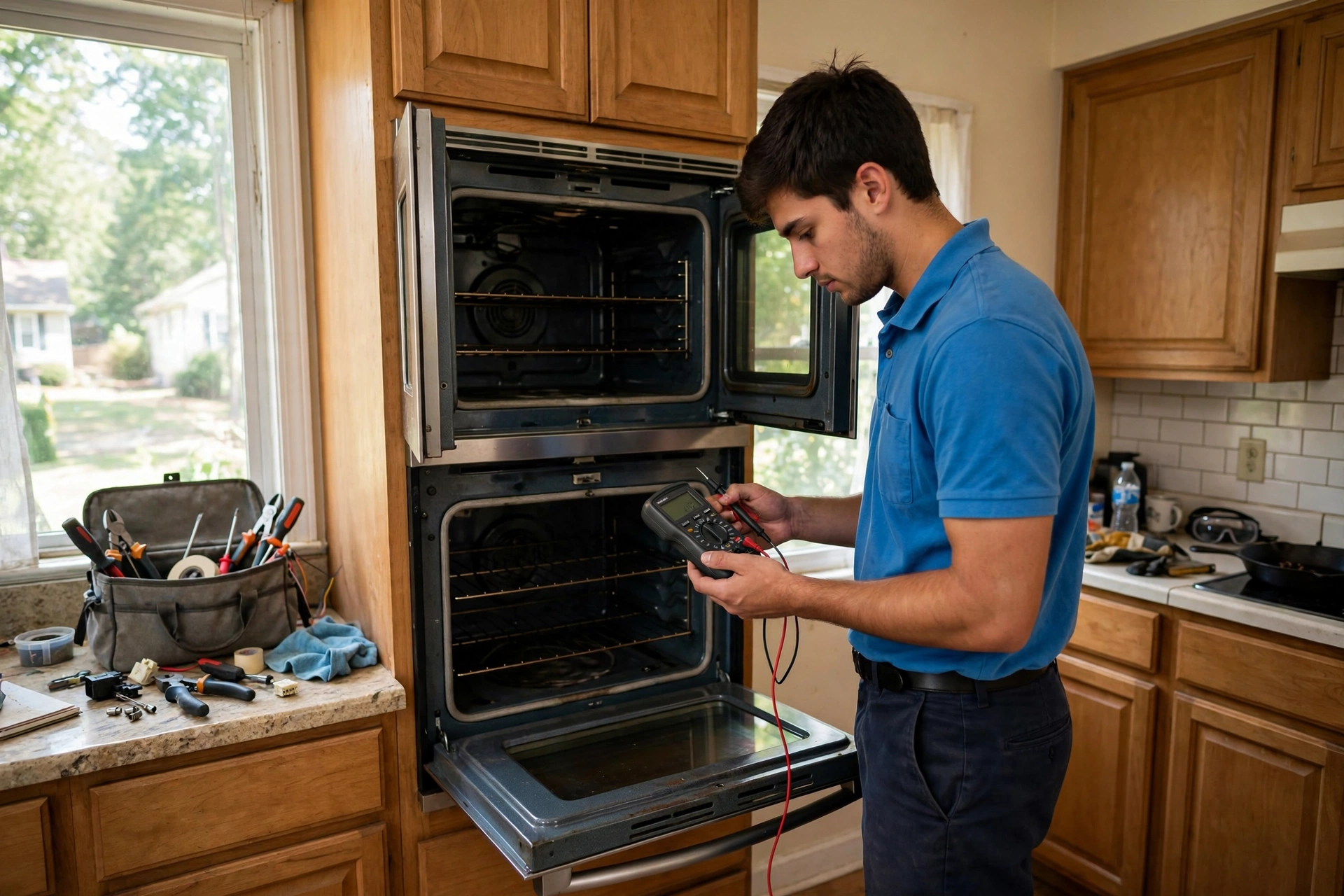
We test per cavity and per system: temperatures in each oven, element and igniter draw in each, and the shared control and cooling path when the story involves both. Landlords near the university get per unit findings in writing that survive tenant changes.
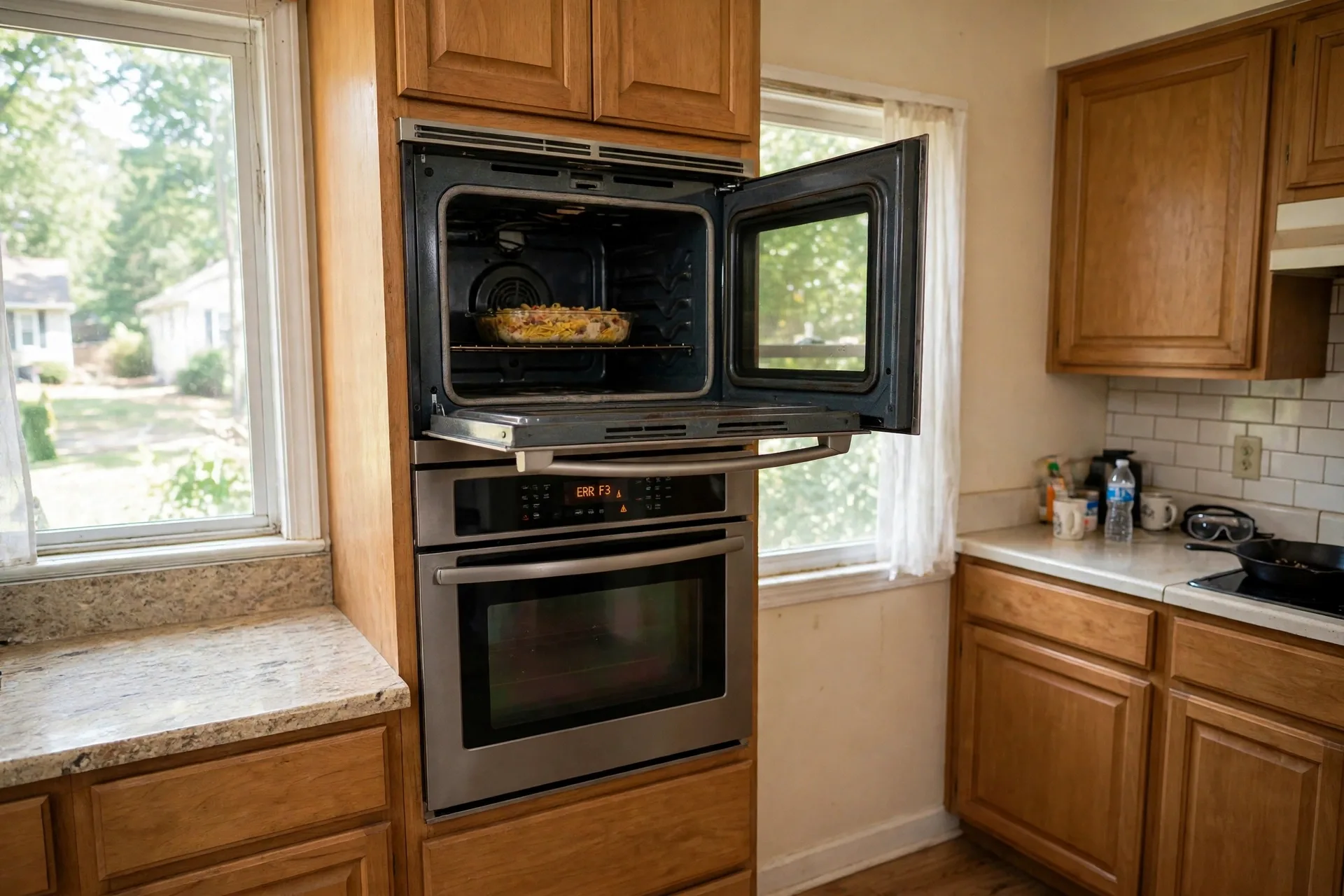
A call from Adelphi: Lower range oven running thirty degrees hot. Testing found a drifted lower cavity sensor. We fitted a new sensor, recalibrated the lower oven, and confirmed both cavities within ten degrees of set point. Basement laundry in College Park rentals lives damp and works hard; the diagnosis starts there.
The honest band runs $185 to $420 here. An igniter or element in one cavity is the low end; a shared control board or cooling system work is the top. One figure is quoted in writing after diagnosis, and the diagnostic fee folds into the repair when you proceed, which is the arrangement the published guides describe. County water hardness scales elements and valves across College Park on a known schedule.
Double ovens invite expensive guessing, because every symptom exists in two copies. We treat the working cavity as a control group and the shared systems as suspects of a different class, which keeps the quote honest. If the repair stops making sense at any point in the diagnosis, you hear it at that point, with the numbers. That rule has cost us jobs and earned us the neighborhood, and it is not changing. Greenbelt's historic housing and the newer builds toward the station run different fault patterns, both familiar.
Use the quote form to describe the symptom as you experience it. The plainer the description, the faster the diagnosis starts when we arrive.
Because most faults are cavity local: elements, igniters, and sensors wear per oven, not per appliance. The working cavity actually helps the diagnosis by proving the shared control and power are healthy. Storm flickers along the Baltimore Avenue corridor age control boards a block at a time.
Usually yes, when testing shows a local fault. If the shared control or a safety component is implicated, we will advise a full rest until repaired. Calvert Hills and Lakeland owners repair first; the testing here respects that instinct with evidence.
Self clean heat is the hardest hour of an oven's life: locks stick, sensors drift, and marginal boards give up. The pattern is common enough that the diagnosis starts there. Semester turns compress appliance deadlines in this town like nowhere else we work.
The visit runs $75 to $125 in the published guides, credited toward the repair in the usual arrangement, with both cavities tested. A repair here is proven under load before it is called done, in rentals and owner homes alike.
Yes. Each cavity has its own sensor and its own calibration offset, and we set them from thermometer readings cavity by cavity. The visit record stays with the household or the landlord file, readings included.
Usually, when the cavities and cabinet are sound: the board restores both ovens at once and the unit's replacement cost is substantial. Testing proves the board before that money is discussed. Semester turns compress appliance deadlines in this town like nowhere else we work.
Use this form for a repair or an installation. A few honest lines about the appliance and its behavior are enough; we read every request that arrives and respond with the relevant range and the next step toward a written figure.
Prefer to talk it through first? Send the form and we will call you back at the number you give us.